




Personal Training in Fairview, NC: Honest Answers to the Questions People Ask Before They Hire a Coach
Most articles about personal training are written for people who already decided to hire one. This one is written for the person still deciding.
I’m Crystal White. I own Specialized Fitness & Nutrition in Fairview, NC. The conversation below is the one I have with most people before they sign up. The version of you reading this is probably 45, hasn’t trained seriously in a while, has tried a Planet Fitness or a chain studio that didn’t take, and is wondering whether a coached gym is going to be different — or whether it’s going to be another thing you pay for and quit. Fair question. Let me answer it honestly.
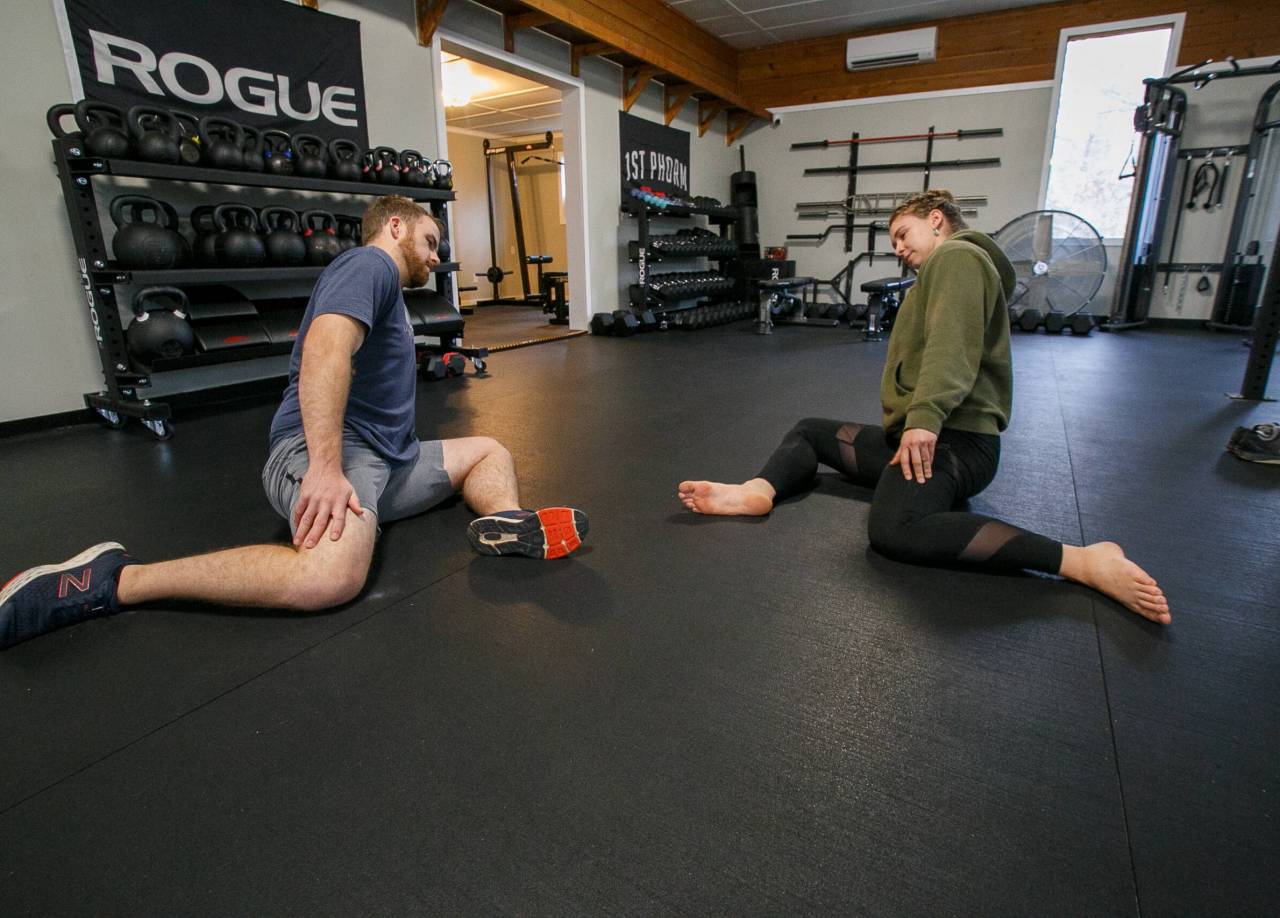
A quick picture of who actually trains here
Before I answer the comparison questions, here’s what the gym actually looks like on a normal weekday morning, because most fitness articles never tell you this part:
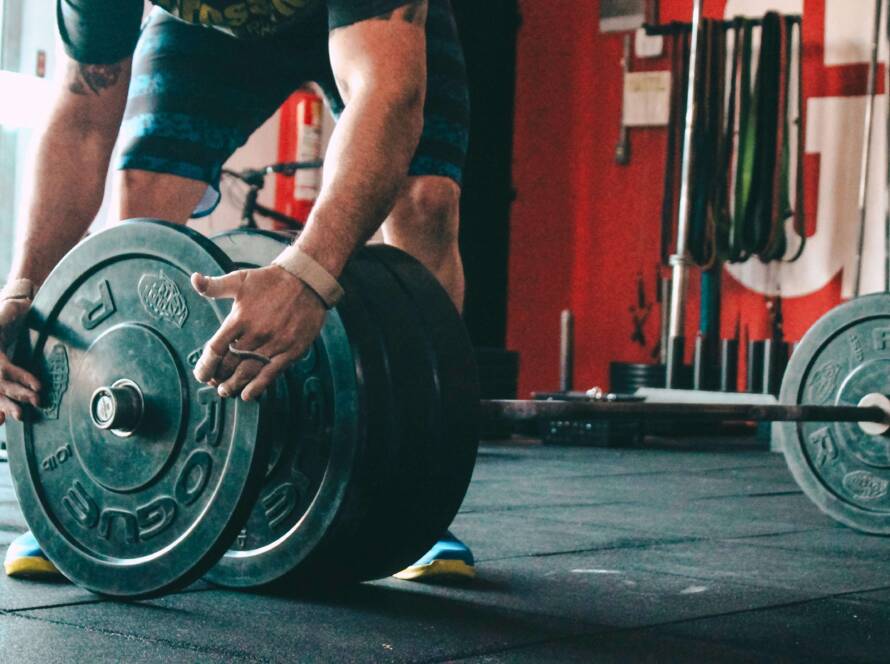
A 50-year-old returning from knee surgery on the platform. A mom of three doing goblet squats with a coach watching her hips. A firefighter on shift conditioning. A woman in her sixties learning to deadlift for the first time in her life. Someone who walked in three months ago having never touched a barbell, now warming up with the bar.
Nobody is looking at anybody else. They’re working. The gym is small enough that the coaches know everyone’s name, and small enough that “coached” actually means coached — not “a trainer is technically on staff somewhere in the building.”
That’s the room. If that sounds like a place you could walk into, the rest of this article is for you.
Go to Personal Training Page.
What Does A Personal Trainer Actually Do?
A personal trainer:
- Builds your program around your body. Your goals, your training history, your injuries, your schedule, your sleep — all of it shapes what you do on Tuesday at 6 a.m.
- Watches your form in real time. Not a video review days later. Right now, on this rep, before a small compensation becomes a habit or an injury.
- Adjusts when life changes. Stressful week, bad sleep, a tweaked shoulder, a vacation — the plan flexes. You don’t have to figure out how to modify it yourself.
- Coaches the technique behind the lift. A squat, a deadlift, a press — these are skills, and a coach teaches them the way a music teacher teaches scales.
- Holds you accountable. A real person is expecting you. That alone changes Tuesday morning.
- Builds knowledge that stays with you. Six months in, you understand your own body in a way you didn’t before — and that knowledge is yours forever.
In simple terms:
A personal trainer is the difference between exercising and being coached. Both move your body. Only one is built around yours.
Do I Really Need a Personal Trainer, or Can An AI Workout App Do The Same Thing?
AI workout apps are useful tools, and pretending otherwise isn’t honest.
What AI apps genuinely do well:
- Generate a reasonable program in seconds
- Track your sets, reps, and volume over time
- Calculate macros and basic nutrition targets
- Adjust weight progressions based on what you logged
- Affordable and available 24/7
Where the human relationship is irreplaceable:
- A coach watches your hip shift on rep seven of a heavy squat. An app cannot.
- A coach notices that your shoulder is compensating before you feel pain.
- A coach walks in, sees you’re stressed and undertrained today, and rewrites the session in 30 seconds.
- A coach knows you. After three months they recognize when you’re holding back, when you’re pushing too hard, and when “I’m fine” actually means “I slept four hours.”
- A coach is in the room when something goes wrong, and in your corner when something goes right.
A workout app is a tool. A coach is a relationship. Tools execute. Relationships adapt, encourage, and persist through the months when motivation runs out — which is most months, for most people.
How Much Does Personal Training Cost at SFN?
We don’t publish a single flat price because it wouldn’t be accurate. Personal training isn’t one product — it’s a few different ones, and the right fit depends on what you’re trying to do.
What we can tell you about how it works:
- Most clients train 2–3 times per week. That’s the frequency that builds real strength without overwhelming your schedule or your recovery.
- Training is structured as a monthly membership, not a per-session purchase. The membership covers your coached sessions plus access to the gym for the days you want to train on your own.
- Many people start in semi-private training (3–6 people). It’s the most common entry point — you get individualized programming and a coach watching your form, but you’re sharing the session with a small group, which keeps the cost lower than 1-on-1 and adds a small-group dynamic that a lot of returning beginners actually prefer.
- One-on-one is available for people who want full coach attention every session, are working around something specific, or simply prefer it.
- Online personal training is an option for people who can’t make it to the gym consistently or who travel.
The reason we don’t publish a price list is that the right answer depends on which of these fits you, how often you want to train, and whether you’re adding nutrition coaching to the program. The cleanest way to get a real number for your situation is the free consultation. We’ll talk through what makes sense and tell you what it actually costs.
Why the cheapest option usually costs more in the long run
A low-cost app feels like the obvious financial choice — until you account for what most people actually pay for it. The hidden cost of cheap fitness solutions is the year you spent not progressing. The injury that took six months to recover from because nobody corrected your form. The third gym membership you canceled because, again, nobody noticed when you stopped showing up.
Personal training is a health investment, and like most health investments, the cost-per-result matters more than the sticker price. A subscription you quit in six weeks costs more per pound of muscle built than a coached program you stick with for two years. Consistency is what compounds — and consistency is mostly a function of whether the system around you supports you when you’d otherwise quit.
I Haven’t Worked Out In Years. Am I Too Out Of Shape To Start?
No.
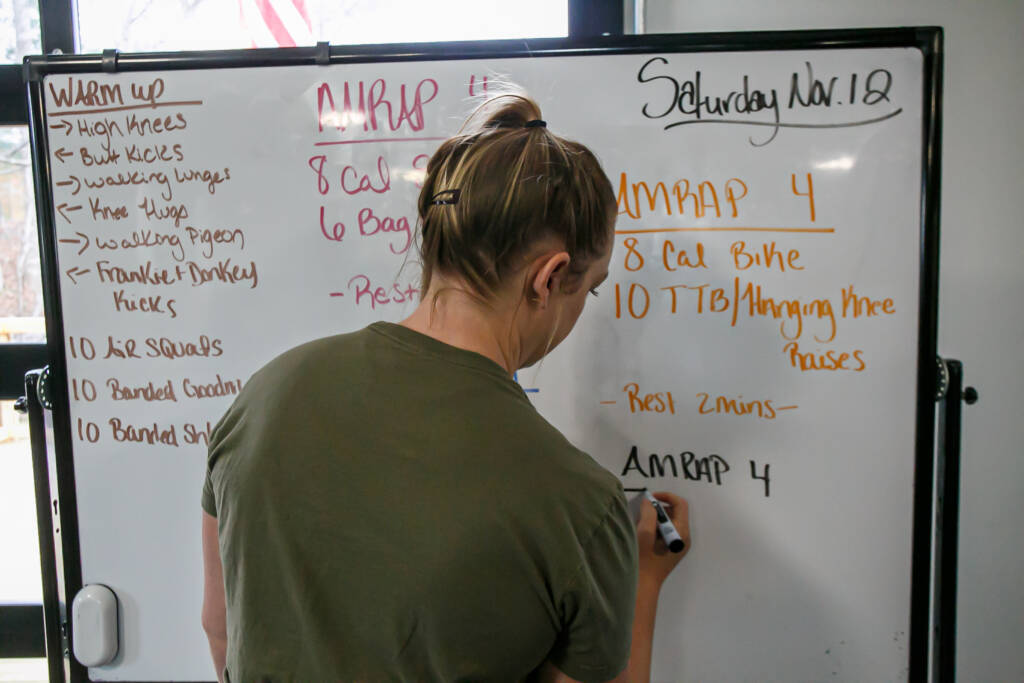
A coach trains you where you are, not where you wish you were. If the first session reveals that you can’t yet do an unloaded squat without your knees caving, that’s the data we needed. We don’t shame you for it. We don’t even react to it. We program around it, and three weeks later your knees aren’t caving anymore.
The majority of new clients at SFN haven’t trained in years. The gym is built for that population.
What Does Month One Actually Look Like For Someone In My Position?
This is the question most articles never answer, so here’s the honest version.
Week 1. A consultation conversation. A movement screen — basic patterns, bodyweight or dowel only. We see how you move, how you hinge, how your shoulders track. No barbells loaded on your back. The first real session is short and calibrated; you’ll move and you’ll probably break a sweat, but you will not be tested or pushed past a real signal.
Weeks 2–3. You’re training 2 to 3 times a week. Most movements still bodyweight or light load. You’re learning the basics — how to set up a squat, how to brace, how to breathe under tension. You’ll feel sore, then less sore, then your body starts adapting fast.
Week 4. You start to load real weight on the basic patterns. By the end of the month, most clients are deadlifting, squatting, and pressing — at a load that’s appropriate for them, with a coach watching every rep. You’ll notice the stairs feel different. You’ll probably be sleeping better.
By day 90. You’ll have lifts you can measure. You’ll know what your current strength numbers are, and they’ll be higher than when you started. You’ll know the names of three or four people on the floor. You’ll know which coach you work with and how they communicate.
That’s a real first 90 days. Not a transformation story, not a before-and-after. Just the actual arc of how someone who hadn’t trained in a decade gets to the point of being a person who trains.
What’s The Difference Between A Personal Trainer, A Fitness App, and YouTube Workouts?
Each of these wins at something. Honest comparison:
| YouTube workouts | Fitness app / AI plan | Personal trainer | |
|---|---|---|---|
| Cost | Free (if you don't mind ads) | Low monthly cost | Moderate cost, designed as a long-term investment |
| Available 24/7 | Yes | Yes | Scheduled sessions |
| Convenience for travel | High | High | Limited |
| Programmed for you specifically | No | Partially | Yes |
| Watches your form | No | No | Yes |
| Adapts when life changes | No | Limited | Yes |
| Notices when you stop showing up | No | A notification | A real person |
| Works around real injuries | No | No | Yes |
| Builds a relationship over time | No | No | Yes |
YouTube and apps win on cost and convenience. They lose on the part most people quit over: nothing happens when you don’t show up. Coaching wins where it costs you the most to be without it.
How Long Does It Take To See Results?
Honest ranges, assuming you’re training 2–3 times a week and eating reasonably:
- Strength numbers: 4–6 weeks for a true beginner. Lifts keep climbing for the first 12–18 months.
- Energy and capability: 6–8 weeks. Stairs feel different. Sleep usually improves before the mirror does.
- How you feel in your body: 8–12 weeks. Posture shifts, clothes start fitting differently before the scale moves.
- Body composition: 12+ weeks, mostly driven by nutrition.
If anyone promises faster, they’re selling something.
What Makes SFN Different From a Planet Fitness, an Orangetheory, or an Online Coach?
Each of these solves a different problem.
Big-box gyms: are cheap and accessible. The trade is anonymity. Nobody is going to notice you, miss you, or correct your deadlift.
Chain studios: sell structure and energy. Less good if you have specific goals, an injury history, or you need someone watching your form on a heavy lift.
Online coaching: works as a supplement, but the coach isn’t in the room when something goes wrong.
SFN, in Fairview: sits in the middle: small floor, coaches who know your name, programming built for your body, and 24-hour access for the days you can’t make a coached session — about 15 minutes east of downtown Asheville.
Will I actually Stick With It, Or Am I Going To Quit Again?
This is the question nobody asks out loud and everyone is thinking. So let me answer it directly.
Most people who quit a gym don’t quit because they’re lazy or weak. Life happens. A parent gets sick. A job changes. Your kid needs you in a way that takes the 6 a.m. window away for six months. Sometimes the season of your life simply doesn’t have room for a new gym, and that’s not a character flaw.
The other reason people quit is friction. The drive was too long. The class times didn’t fit. Nobody noticed when they stopped showing up. The plan got harder while real life got harder, and there was no one to adjust it.
Coached training removes the friction reasons. It can’t remove the life reasons — nothing can. But here’s what it can do, that an app and a big-box membership can’t: when life pulls you out for two months, someone notices. The plan adjusts when you come back instead of resetting from zero. That’s the part that matters.
A Note on The Consultation – Book A Free Consultation at SFN.
tIf reading this got you closer to a decision, the next step is a conversation. It’s free, and it’s a conversation, not a sales appointment — we’ll talk about what you’re trying to do, what you’ve tried before, and whether SFN is the right fit. If it isn’t, we’ll tell you that.
We’re at 15 Kristie Scott Ln in Fairview, NC, about 15 minutes east of downtown Asheville. (828) 767-2632. You can also schedule through this link.
Frequently Ask Questions About Personal Trainig Near Asheville and Fairview
AI workout apps are useful tools for generating programs and tracking workouts, but they cannot replace what a human coach provides — watching form in real time, adjusting to a real injury, building a relationship over months, and providing accountability when motivation runs out. AI tools work best alongside coaching, not as a substitute.
Personal training at SFN is structured as a monthly membership, with most clients training 2–3 times per week. Many start in semi-private training (3–6 people), with 1-on-1 and online options also available. Because pricing depends on which format fits and how often you train, exact pricing is shared during a free consultation.
A gym membership buys equipment access. Personal training buys individualized programming, form coaching, real-time adjustments, and accountability — the things that actually drive results. If you have a gym membership you don’t consistently use, redirecting some of that spend toward coaching usually produces better long-term outcomes than adding more equipment access.
The first week includes a consultation, a movement screen, and a short calibrated session — no heavy lifting on day one. Weeks two and three focus on learning fundamental patterns at light load. By week four, most clients are loading real weight on basic lifts with a coach watching every rep. By 90 days, clients have measurable strength numbers and a clear sense of how their training fits into their life.
Yes. Coaches regularly train clients working around knee replacements, shoulder issues, back problems (including post-accident recovery), post-pregnancy recovery, cardiac history, and chronic conditions like arthritis or PCOS. The exception is active rehab from recent injury or surgery — in those cases, your physical therapist directs the program first, and the coach coordinates with them.